The Life Cycle of a Salmon
an Educational Resource made by Angus Yue

The Life Cycle of a Salmon

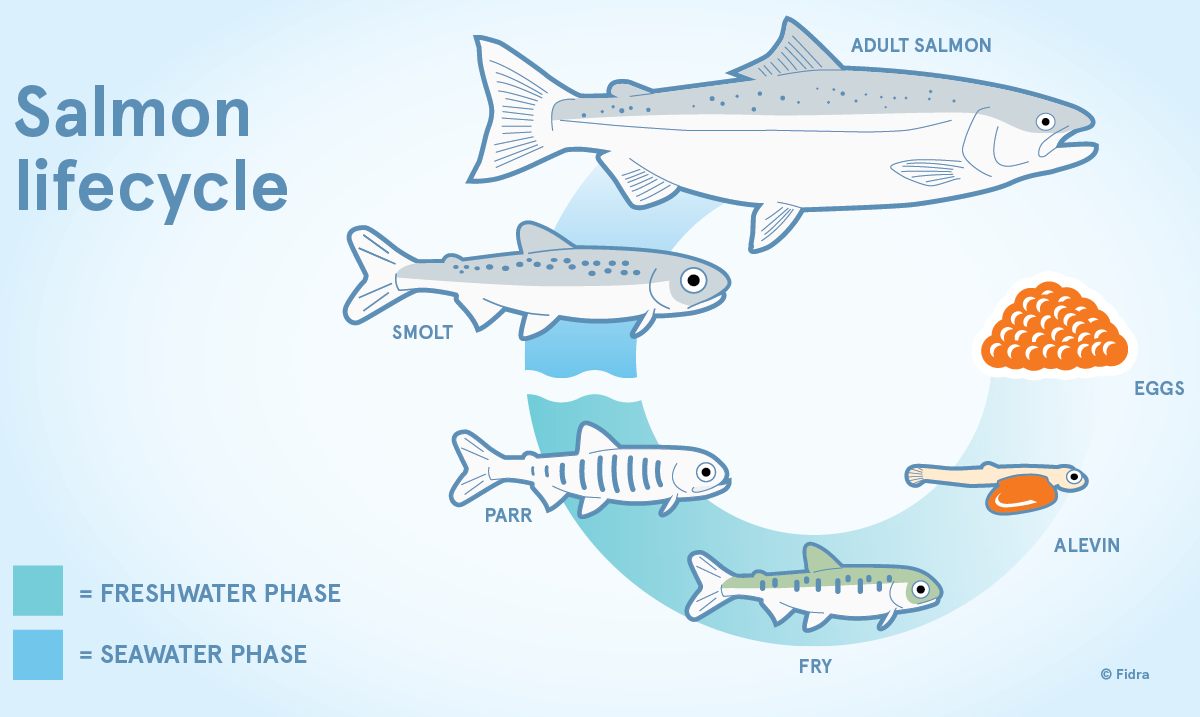
Life Cycle Infographic

Egg

The female salmon lay fertilized eggs in the redds they dug out. The eggs will hatch in about 3 months.

Alevin

Once the salmon hatch from the eggs, they are called alevins. During this stage, alevins will feed on a yolk sac attached to their bellies and stay hidden in gravel.

Fry

Alevins will become fries once they have fully consumed their yolk sac. During this phase, they will stay in freshwater rivers to feed on small aquatic insects.

Parr

During this stage, the fries will start to develop vertical markings along their side.

Smolt

The salmon entering saltwater are called smolts. They migrate from the rivers to the sea. Most species will remain in estuaries to adapt to the transition, though the time varies amongst different species.

Adult Salmon

Salmons spend around one to eight years feeding and maturing in the ocean.

Spawning Salmon

When it is time for salmon to spawn again, they migrate back to their natal streams to spawn, where they go through changes such as shape and colour.

They will not feed in freshwater as their only instinct is to make it to the spawning grounds.

Salmon will die after spawning.
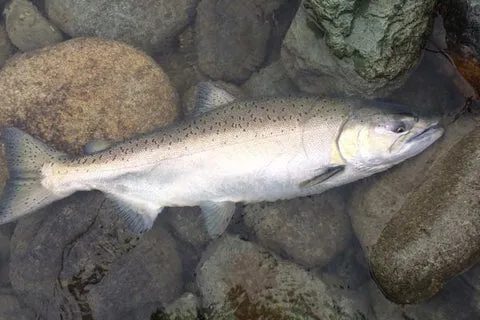
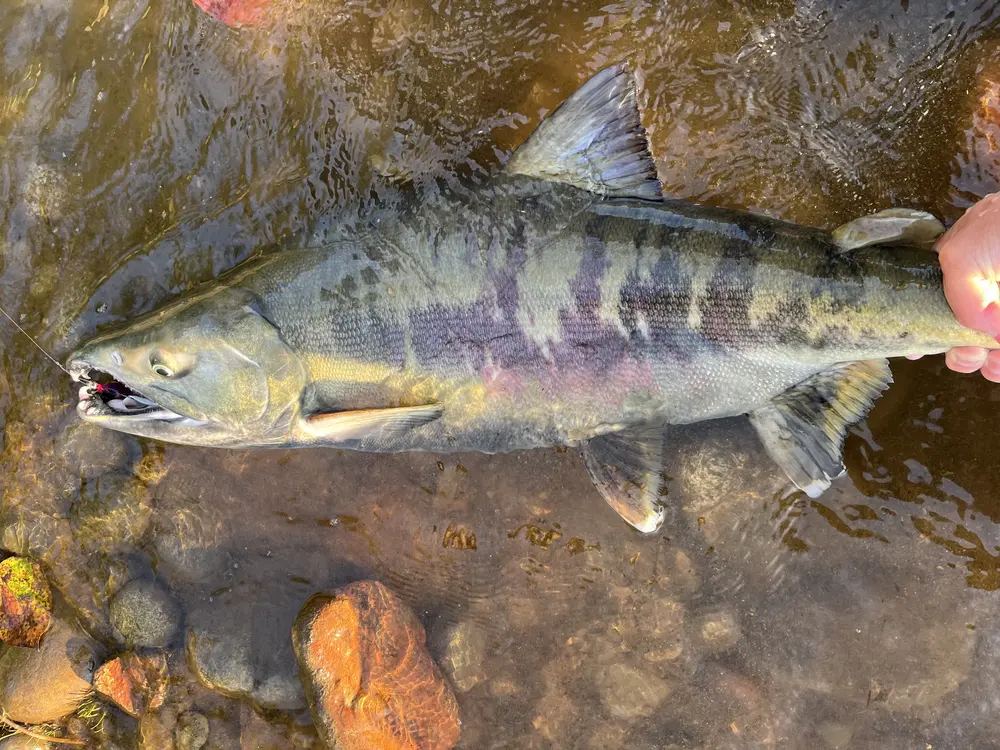
Case Study: the Chum Salmon

After maturing in the ocean, chum salmon return to their natal streams to spawn.

Salmon are anadromous, migrating from the ocean to rivers to spawn. They do not feed in freshwater, so they must rest periodically to conserve energy.

Their journey is challenging due to fast currents; many die from exhaustion, predation, or angling. This stressful migration causes them to deteriorate physically, often referred to as a “zombie-like” state.

Chum salmon typically arrive late—September to November—with some stragglers in December. They are abundant in the Lower Mainland, especially in the Stave River.

Although they are the fastest to change color among Pacific salmon, chum are not prized for table fare due to their lower fat content.

Despite their challenging upstream migration, the surviving salmon reach the spawning grounds to lay and fertilize eggs, continuing the cycle of life.

Filming Location

Broadband Providers

Types of Salmon Found in BC

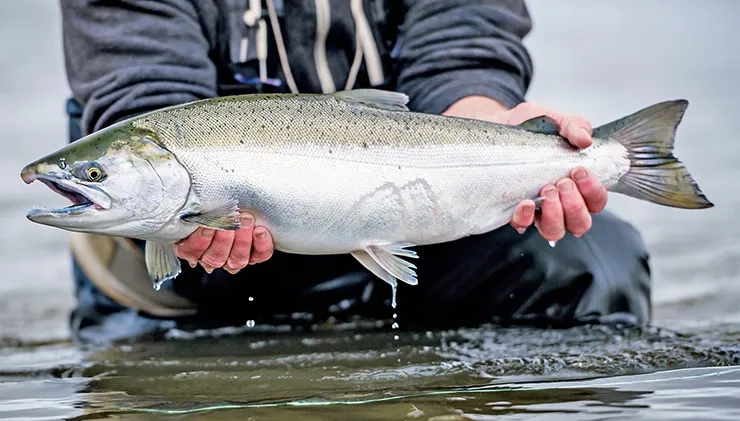
Chinook Salmon

Chinook Salmon

  • Dark mouth with black gums; large, sharp teeth
  • V-shaped tail, silvery; spots on both lobes
  • Large spots on back

Coho Salmon

  • White mouth (may have black edge, white gums); sharp, medium-sized teeth
  • Square tail, silver; some spots (usually on upper lobe); wide tail base
  • Spots on upper part of body
  • Body turns olive brown to black in freshwater phase
Coho Salmon
Chum Salmon

Chum Salmon

  • White mouth (tongue may be black); large teeth
  • No spots on back or tail; possible faint vertical bars on silver fish; white tip on anal fin
  • Vertical bands on sides; may be reddish purple on males in freshwater phase

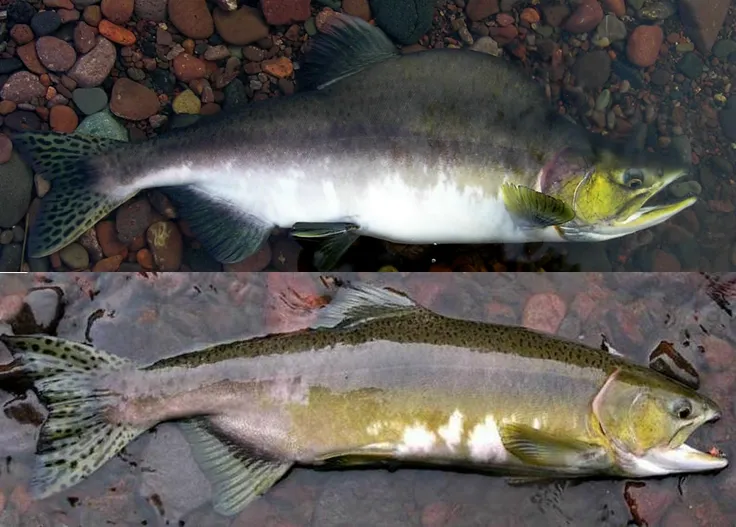
Pink Salmon

  • White mouth with black gums; in marine areas, almost no teeth
  • V-shaped tail, no silver; large oval spots on both lobes
  • Large spots on back; smallest species
  • Hump found on males during freshwater phase
Pink Salmon
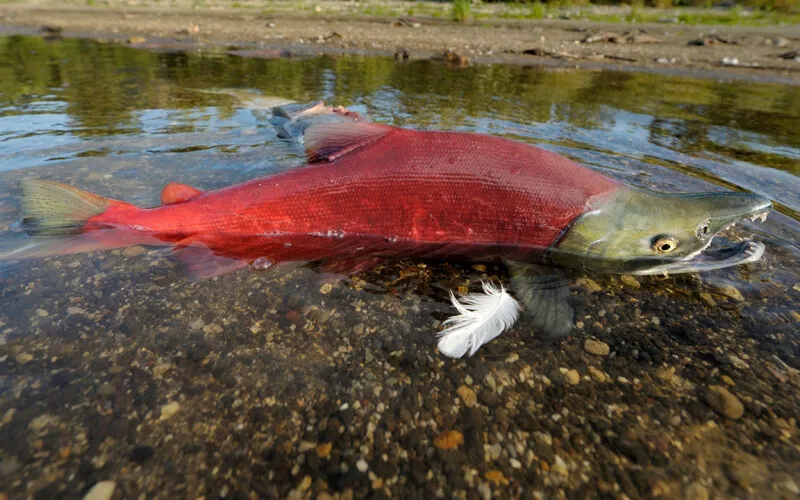
Sockeye Salmon

Sockeye Salmon

  • White mouth with white gum line; small teeth
  • Moderately forked tail; no spots
  • No spots on back or tail; prominent, glassy eyes
  • Greenish head, red body during freshwater phase

The Significance of Salmon in the Ecosystem

Sources

https://www.pac.dfo-mpo.gc.ca/fm-gp/rec/identify-identifier-eng.html